
Building a New Anesthesia Team: NAPA’s Proven Solution for Smooth, Sustainable, and Successful Transitions

Situation
Navigating change is hard. In healthcare, consolidations, expansions, financial concerns, staffing shortages, and shifting community needs are challenging hospital administrators to rethink and restructure operational processes and employment models across their clinical and business functions. Whether change is proactive or reactive, the perception is that transitions are disruptive. Yet, well-managed change does not have to be difficult. Effective change management produces positive organizational outcomes.

Problem
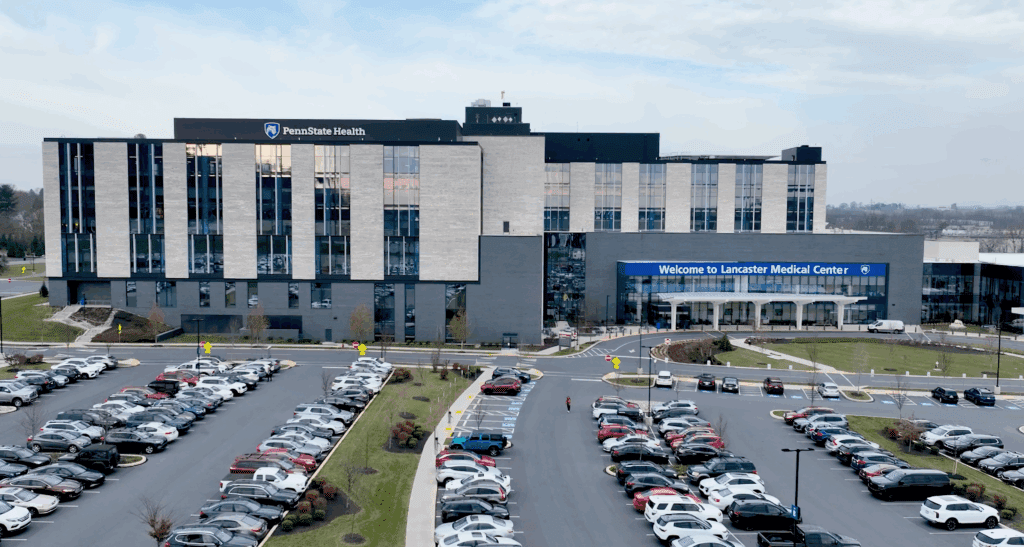
Penn State Health was building a de novo community hospital to serve patients in Western Lancaster County (PA) a healthcare alternative to regional facilities located up to an hour away. The health system’s goal was to offer a new and different level of service that would create exceptional patient experiences. To succeed in this important endeavor, the hospital’s leadership needed more than bricks and staff. They wanted real partners committed to helping the health system fulfill its vision for the new Lancaster Medical Center (LMC).
Solution
From a prior hospital relationship with NAPA, LMC’s Vice President of Operations knew NAPA to be an anesthesia partner that delivered trust, reliability, and accountability. As the nation’s largest single-specialty anesthesia and management services organization—with more than 40 years of experience and a successful track record managing over 150 hospital transitions—she knew NAPA had the resources to build a new anesthesia department from the ground up, with a proven process for recruiting talent, creating culture, and facilitating a sustainable anesthesia solution.
Launching a new facility or making a major transition as a clinical service organization presents unique challenges. At LMC, NAPA’s regional business and clinical leaders began by working side by side with hospital leaders during the construction phase. Contributing their perioperative expertise by anticipating patients’ and clinicians’ needs in every contingency, as well as the hospital’s projected growth, NAPA helped design optimal physical spaces that would enhance throughput, patient safety, and the delivery of high-quality care.

Recruiting a Talented Team
NAPA’s recruitment strategy, market reputation, and resources to provide interim anesthesia clinical leadership and staffing during the recruiting process made it possible to be selective in hiring top talent directly, entirely free of agency fees. On day one of operations, LMC was fully staffed with an exceptional, fully employed team, available for 24/7 coverage.
Opening a new facility that soon expanded from one to nine operating rooms, with no part-time locums or per diems on the anesthesia team, was a testament to NAPA’s staffing expertise and quality culture. Talented clinicians wanted to join NAPA to serve at LMC. NAPA has since been instrumental in helping to expand the hospital’s service lines and case volume.
Building a Collaborative Culture
Bringing together an anesthesia care model team with physicians and CRNAs from different backgrounds and practice experiences requires building consensus around standardizing processes, techniques, and equipment across the perioperative suite. Creating a collaborative culture begins with good leadership.
“We needed to build a strong culture and provide a team that would serve the hospital’s mission and be present for its community. This was a vision to create something truly exceptional,” said Lisa Ganz, MSN, CRNA, APA Director for NAPA’s Mid-Atlantic Region. “Building a new anesthesia department is much more than just an operational task. It is a commitment to construct a foundation that supports the highest standards for anesthesia services.”
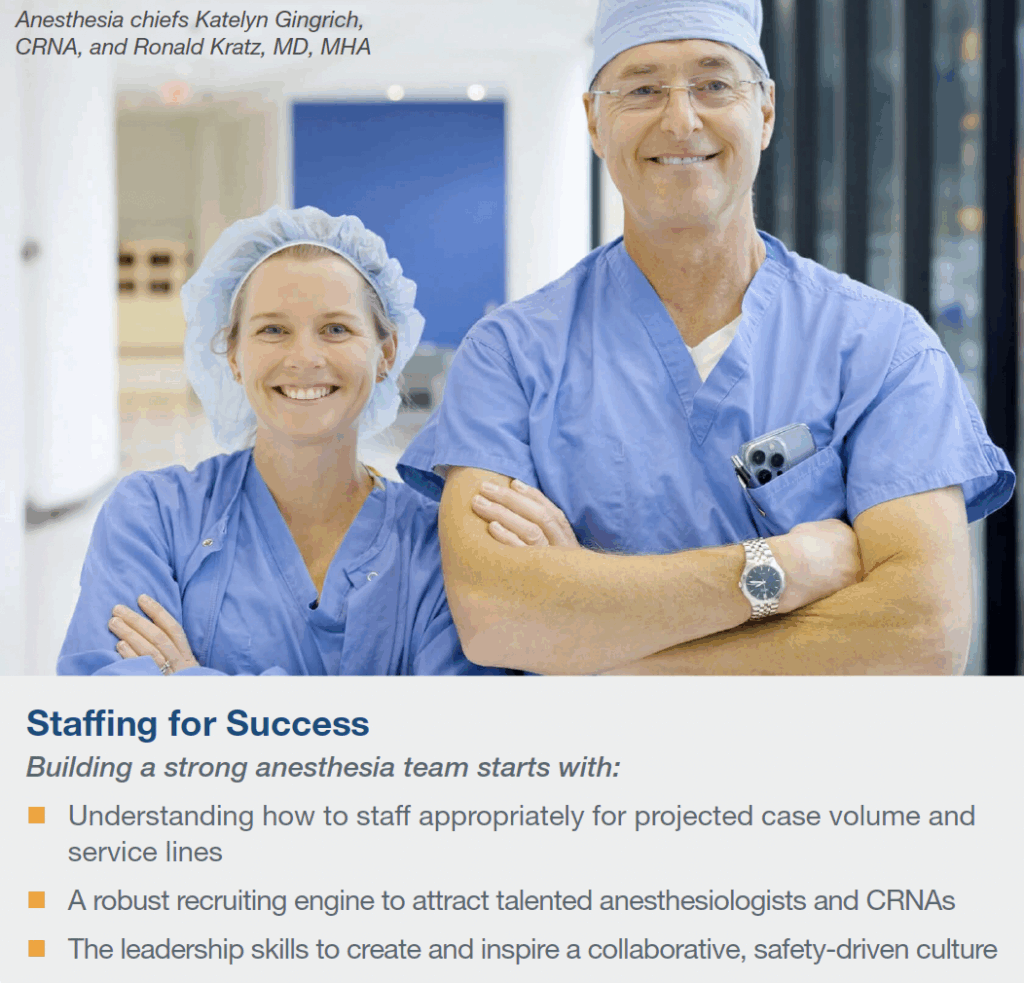
NAPA anesthesia chiefs receive advanced leadership training to ensure they can effectively direct a department. As chiefs, they must unify a team, communicate effectively with clinical colleagues and hospital administrators, standardize best practices, anticipate staffing needs, and support institutional goals. Additionally, they motivate professional growth in their team; model empathy, compassion, and respect; and foster an environment of patient safety and quality care across the perioperative spectrum for every patient, every day.
“Anesthesia is well-positioned to fill the role of organizing and collaborating perioperative efforts because we are the team that is here every day and we interact with all the specialties,” said Ronald Kratz, MD, MHA, NAPA’s Chief of Anesthesia at Lancaster Medical Center. “We can see what different teams need, and what we need to provide to offer safe and efficient care with and for each specialty team. We also have the ability to communicate those needs effectively to surgeons and hospital administrators. I think the blueprint for success is to not only know what your metrics are, but also to find out what’s important to the other members of the team, and work to establish and fulfill their metrics so that everyone feels like they’re getting a win.”
Let’s Connect : Solutions@NAPAanesthesia.com