
Ensuring Patient Trust in a COVID-19 World
Transparency, communication, and compassion matter more than ever.
By Jonathan Markley, DO
Chairman of Anesthesia, East Orange General Hospital, East Orange, NJ
Director of Regional Anesthesia, St. Joseph’s University Medical Center, Paterson, NJ
Clinicians are well aware of the protocols they and their sites practice daily to keep their patients safe. Patient safety has been a growing healthcare priority for the past two decades, and anesthesia teams are proactive partners in this mission, working with their clinical and administrative colleagues to promote a culture of safety and quality throughout the perioperative spectrum of care.
It is easy to assume that patients are equally aware of the extreme measures we take on their behalf. Prior to the pandemic, surgical patients came to sites for elective or emergent procedures with varying levels of safety awareness, ranging from informed questions to blind trust. Now, in the new normal of COVID-19, patients are cautious and hypervigilant about what will happen when they go to hospitals and ambulatory surgery centers (ASCs). This new world is no place for assumptions. If we want to welcome more patients back to our operating rooms (ORs), we must communicate explicitly to manage expectations. Patients demand and deserve our full transparency to restore their confidence and trust.
MAKE THE CALL
For surgical patients, much has changed. Scheduling, presurgical preparation, and arrival procedures all have new layers related to COVID-19 concerns. Already anxious patients now worry: Should I wear a mask? Can my family come with me? Do I need a COVID-19 test? In this heightened environment, a preoperative phone call, with a compassionate and thoughtful bedside manner, is the best way to tell patients we are thinking about them and communicating what we are doing to keep them safe. Clear instructions and education, provided on a website portal or by mail, are necessary; however, one-way communication is not enough. In this era, a phone call allows patients to ask questions and clinicians to demonstrate empathy while conveying critical information.
EXPLAIN WHAT WE DO
Confidence comes when patients understand how healthcare providers have ensured their safety before, and what extra precautions we are taking in these pandemic times. For example, perioperative teams have always spent lots of time developing policies and procedures to minimize the risk of infection in ORs. In light of COVID-19, we now are hyperfocused at all times. This translates into an even safer experience, not only from COVID-19, but also in preventing wound infections and the spread of other respiratory infections. We now have the added protection of keeping patients socially distanced, doing patient interviews at a distance, wearing masks and eye protection, enforcing enhanced policies for disinfecting surfaces and for hand hygiene, and ensuring that we, as healthcare providers, get our flu shots.
Additionally, the air in the OR is purified of COVID-19 and other dangerous pathogens with HEPA filtration and is exchanged a minimum of 12 times an hour and frequently more than 20 times per hour. Clinicians are screened for temperature and symptoms and removed from patient contact if needed. Our facilities are also able to stay ahead of an outbreak or second wave by monitoring key statistical indicators in surrounding counties and towns, including:
- Number of new cases per day (per 100,000)
- Testing positivity rates
- Hospital capacity
We also added presurgical COVID testing within 96 hours of all procedures after discovering that patients infected with COVID-19 may be at greater risk for perioperative complications. Following a nasal swab, we ask patients to self-isolate until the procedure. With a negative test result, we can confidently proceed with the patient’s procedure. This also protects the clinical team and other patients in the facility. A multidisciplinary, multifaceted approach offers patients a safe experience. By communicating all that we are doing, we earn patients’ trust. When patients are educated on how a COVID test can reduce their risk, they better understand that their safety is our highest concern.
COMPASSION IS CRITICAL
Striving to be a high-reliability healthcare organization in a COVID-19 world requires consistency of best practices in all aspects of care, including how we interact with patients before, during, and after surgery. We know that patients who are calm and feel well cared for in their perioperative experience can have better outcomes, so our evidence-based efforts to improve quality must value the positive impact of establishing human connection. Patients who are navigating the “new normal” need to feel that we are collaborating with them. When they feel confident of this, patients want to return to our sites for necessary and elective surgeries.
NAPA anesthesia clinicians have always put patient safety first. As part of our commitment to creating exceptional patient experiences, we have also placed a premium on compassion. In a world shaken by COVID-19, empathy has truly helped make a difference for our patients. We want to be there for them, managing their pain with a humanistic touch. We want to prevent their suffering, whether that means using pharmacologic options; guided imagery, relaxation and breathing techniques; lending an ear; or taking the time to speak with them.
Healthcare is a system with many moving parts, which makes collaboration an ever-present challenge. To earn patients’ trust in this unprecedented pandemic, we must accelerate and elevate our goal to deliver consistent, connected, and compassionate patient care.
Jonathan Markley, DO, serves as a Chief of Anesthesia for North American Partners in Anesthesia (NAPA). Dr. Markley is a Diplomate of the American Board of Anesthesiology. His professional affiliations include membership in the American Society of Anesthesiologists and American Society of Regional Anesthesia. Over the course of his career, Dr. Markley has received many accolades, including the 2017 St. Joseph’s Regional Medical Center Physician Innovation Award and the 2017-2020 New Jersey Monthly Top Doctor Award in Anesthesiology & Pain Management. Dr. Markley was also a recipient of NAPA’s Peter Walker, MD Mission, Vision, Values Champion Award.
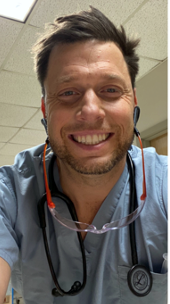
Jonathan Markley, DO, serves as a Chief of Anesthesia for North American Partners in Anesthesia (NAPA). Dr. Markley is a Diplomate of the American Board of Anesthesiology. His professional affiliations include membership in the American Society of Anesthesiologists and American Society of Regional Anesthesia. Over the course of his career, Dr. Markley has received many accolades, including the 2017 St. Joseph’s Regional Medical Center Physician Innovation Award and the 2017-2020 New Jersey Monthly Top Doctor Award in Anesthesiology & Pain Management. Dr. Markley was also a recipient of NAPA’s Peter Walker, MD Mission, Vision, Values Champion Award.