
Compassion in action: Witnessing kindness in the ER with my toddler
By Ryan Chesterman, MPA, Service Experience and Wellness Coach

A child’s fever is always worrisome for a parent. Add in a pandemic, and a fever becomes worrisome enough for a trip to the emergency room.
When my 2-year-old son woke with a fever, my wife and I erred on the side of caution and consulted an expert. Living through the surge of COVID-19 in New Jersey, my family has taken extra precautions these past months to keep ourselves and our two young sons safe. While our boys have been back in daycare since June, and this wasn’t my son’s first fever since COVID appeared, the recent uptick in COVID-positive cases in my area made me fear that my son might have COVID.
The ER wasn’t our initial stop. We first scheduled a “sick appointment” with our son’s doctor. After an evaluation, his pediatrician diagnosed it as a simple virus picked up at daycare. We were advised to monitor our son’s fever and call back if anything changed. Throughout the day and night, my son behaved atypically—not eating or drinking as much as usual. The next day, we managed his fever with over-the-counter treatments, and he seemed to improve. But on the third day, his fever spiked. Now, cue the ER visit.
As my wife and I rushed our 2-year-old to the hospital, our minds were ablaze with questions and worries:
- Would we both be allowed in with our child?
- Should we make sure he is wearing a mask—even if he fights us?
- Are there going to be COVID-positive patients around us?
- If he does have COVID, do we have it, and by going to the hospital, are we exposing others?
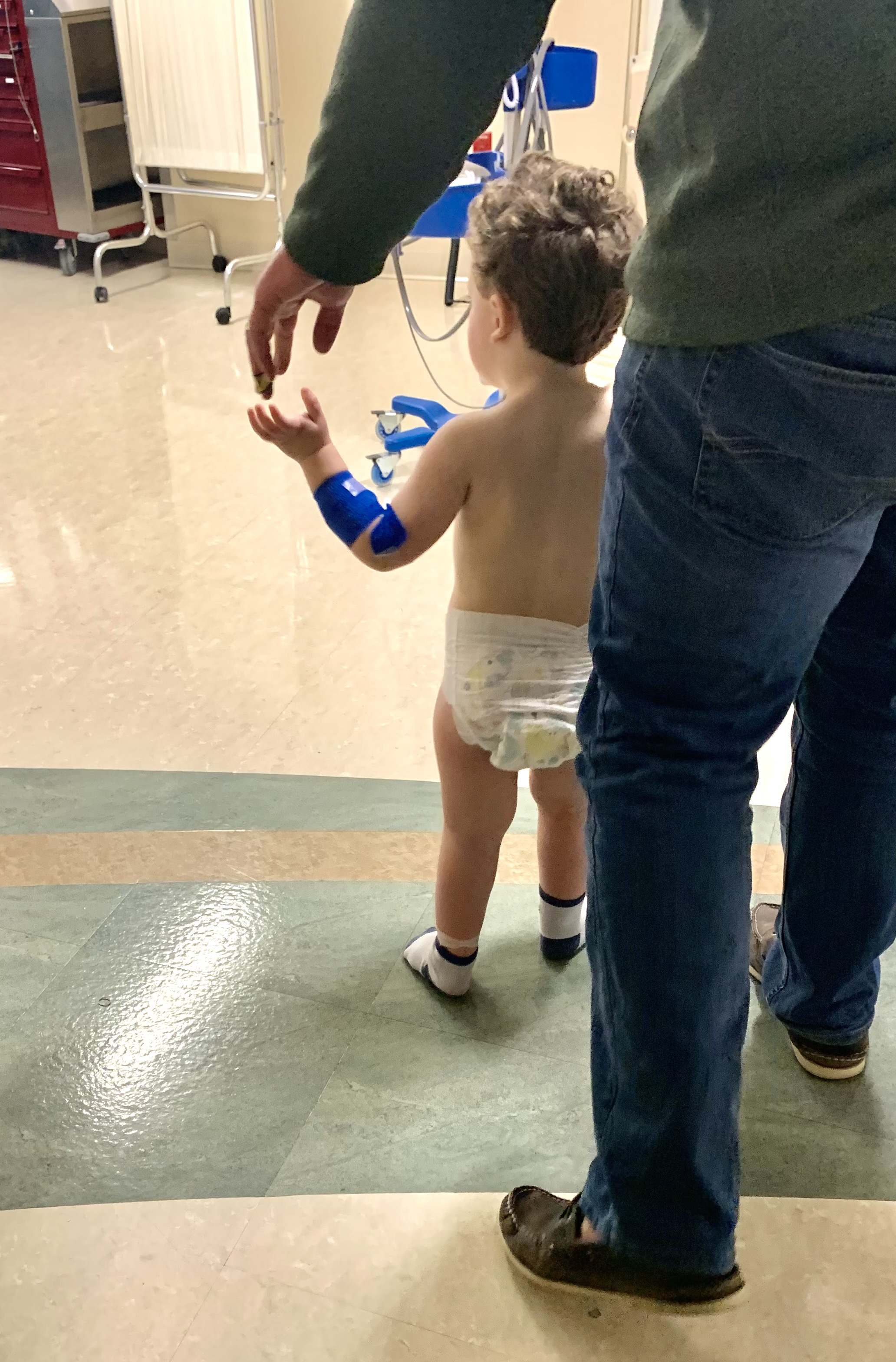
When we entered the hospital, my thoughts were going in two directions. As a concerned father, I was of course focused on my son. As a professional, I was observing everything around me. My entire career has been spent in healthcare, much of it in patient and service experience. So, my visit to the ER during COVID, with a sick child, was probably somewhat different than most parents’. I was keenly aware of how registration staff interacted with patients, the personal protective gear (PPE) they wore, and the questions they asked during check-in.
Twenty minutes later, we were taken to a bed in the emergency department. A young nurse came in and introduced himself before beginning an initial evaluation on my son. Eventually, a doctor arrived for a full assessment. Based on the duration of my son’s fever and his lack of eating and drinking, the medical team decided to place an IV to help replenish fluids. They drew blood to rule out other issues and took nasal swabs for strep, flu, and COVID. After reviewing my son’s initial results, the doctor ordered an X-ray, which revealed a lung infection. My son was diagnosed with pneumonia and prescribed antibiotics. It would take two days to get the COVID test results, but the team was hopeful he was COVID free.
Compassion brings the “care” to healthcare
My family took two important things home with us that day: a solid treatment plan for our child and a positive patient experience. As the Service Experience Coach for North American Partners in Anesthesia (NAPA), I normally have the privilege of traveling to all the states where our clinicians provide care. I spend time with our practice groups to observe their work settings and provide guidance and recommendations on how our clinicians can enhance patients’ experiences.
Because of COVID, I haven’t traveled since last spring. This visit to the ER was my first time back in a healthcare setting, seeing and hearing medical staff and teams interact. Viewed through a patient-experience lens, it was refreshing to see those healthcare professionals in action and observe how they find the humanity in their work even through the layers of PPE.
Our overall experience in that ER is one I would rate as excellent. Even during a pandemic, I was pleased to see all staff and clinicians approaching my worried family with such kindness, compassion, and empathy. I noticed and appreciated that they went the extra mile to help keep my son at ease. Had I (or another adult) been the patient, I wonder if the experience would have been the same. Humans sometimes treat children with more gentleness, forgetting that every person—every patient—benefits from kindness, compassion, and empathy. But let’s not get cynical.
When healthcare professionals don’t demonstrate the kindness my family encountered, is it because stress or burnout that stretches their compassion too thin, suppressing the innate desire to connect with patients and show empathy and compassion? Or are they suffering from emotional fatigue because they are not taking care of themselves personally, which takes a toll on professional life? Whatever the reason, the solution is to make an active effort to understand the feelings of others and read their behaviors to determine what they need. The goal is to find ways to help patients feel trusted, safe, and cared for.
The science of kindness
In a recent IDEAS.TED.com article about words and actions, neuroscientist Lisa Feldman Barrett, PhD, discussed the importance of being attuned to the “body budgets” (or “bodily resources”) of those around us, and how the ebb and flow of human engagement can change our behaviors for better or worse, and sometimes even change our brain.
Feldman Barrett says: “The more familiar the other people are to you, the more efficiently your brain predicts their inner struggles. The whole process feels natural, as if you were reading another person’s mind.
“But there’s a catch — when people are less familiar to you, it can be harder to empathize. You might have to learn more about the person, an extra effort that translates into more withdrawals from your body budget, which can feel unpleasant.…,” writes Dr. Feldman Barrett.
So, using this science, what about my family’s ER visit resulted in an excellent experience? A child’s emotions are often simple to read, but it does take a level of commitment to recognize and react with compassion. When our ER doctor first entered our room, she was of course hidden behind multiple layers of PPE. The arrival of this masked figure threw my already-nervous son into a panic. He was clinging to me, crying and clearly stressed.
Instead of grumbling or allowing the experience to be a negative one, this doctor quickly recognized my son’s emotional need in that moment. She said, “I’ll be right back,” and immediately left the room. When she returned just a minute later, she brought a marker with her. She drew a smiley face with eyebrows on her disposable outer mask, and then she blew up a rubber glove and drew a face on that too.
My son may not have been overly impressed by this effort, but I sure was. This doctor’s extra effort to create a positive experience built trust for me and eased my stress. As someone in the service experience field, it gave me hope that regardless of a patient’s age, gender, race, religion, or diagnosis—and even in a time of COVID—this clinician understood the importance of going the extra mile to make patients feel comfortable and connected.
The same thing happened with the secondary nurse. She wanted my son to drink fluids, but he wanted no part of it. She ran to inpatient pediatrics and grabbed some stickers, which she used to decorate a cup. When she handed that cup to my son, he calmed a bit more, and said, “Oh, Transformers. Cool!”
In my pre-COVID training days with our anesthesia clinicians—clinicians who often have the shortest amount of face time with patients, and yet, play a critical role in their care—I would always emphasize the value of eye contact and body language as ways to connect with patients. PPE certainly creates an immense barrier for now. That’s why things such as eye contact and small acts of kindness and compassion are even more important. In the end, those small acts can make all the difference in the world.
My wife and I can vouch for that.
About the author
Ryan Chesterman, MPA, is the Service Experience & Wellness Coach for North American Partners in Anesthesia (NAPA). In this unique role, he is responsible for improving clinical interactions with patients and driving patient engagement at NAPA’s 500+ clinical sites, including hospitals, ambulatory surgery centers (ASCs), and office-based practices. Ryan is passionate about helping clinical teams and clinicians hone their communication skills. He frequently lectures and publishes about compassion and the patient experience.
How can NAPA help your team or facility improve patient satisfaction?