Overcoming unconscious bias with empathy and compassion

Jonathan Markley, DO, is chairman of anesthesia and a physician anesthesiologist at an urban hospital serving the community of greater Newark, NJ. He sometimes sees patients from challenging socioeconomic circumstances, and for some of those patients, managing their daily health comes secondary to basic needs. Dr. Markley recalls one patient who came in for a hip replacement; he would be providing this patient’s anesthesia during surgery. Due to the patient’s circumstances, optimal care for a hip problem was not an option, and therefore, the patient resorted to self-medicating with opioids for pain control. The patient eventually became addicted to the less expensive option of heroin.
“I could have told the patient we were cancelling the case due to drug use, or the patient—fearing judgment—could have withheld this critical information from me,” says Dr. Markley. “Instead, I tried to build trust by letting the patient know I understood how chronic hip pain led to heroin addiction, and I wanted to help. This enabled us to have a deeper conversation about the need to stay clean for the surgery and how to correctly obtain and use a specific medication post-surgery to stop the heroin dependency.”
It would be easy for Dr. Markley to make negative—and often incorrect—assumptions about his patients’ lives and health histories. It’s equally likely that when many patients come in for surgery, they make incorrect assumptions about Dr. Markley. Such is the nature of unconscious bias.
Dr. Markley may have changed that patient’s life in a matter of moments, observes Ryan Chesterman, MPA, NAPA’s Service Experience & Wellness Coach. “Overcoming unconscious bias means resisting a rush to judgment and making the decision to get closer through empathy and compassion,” he says.
Patient Safety Awareness Week (PSAW) reminds clinicians that we are safer together. Recognizing unconscious bias and using empathy and compassion to overcome its insidious impact on clinical decision-making is a powerful way to embrace a commitment to patient safety.
What is unconscious bias?
Unconscious bias occurs when your brain quickly processes information to form conclusions. Your brain draws from your life experiences and impressions and may (unknowingly to your conscious self) use stereotypes and misconceptions to influence your decisions. In healthcare settings, evidence shows that unconscious bias can lead to negative outcomes, particularly for minority groups.
In its January 2020 cover story “Implicit Bias: Recognizing the Unconscious Barriers to Quality Care and Diversity in Medicine,” Cardiology Magazine wrote, “Everyone, including physicians and other healthcare professionals, has implicit, also called unconscious, biases that affect how they view the world and interact with others.”
“Everyone” means unconscious bias is a two-way problem that arises when clinicians and patients alike bring their biases into the perioperative setting. We are all human after all.
Use a humanistic approach
Rachel Wolfe, MSN, CRNA, believes that clinicians have only five minutes to build a rapport and establish a trusting relationship with a patient. She begins every new interaction by looking for points she can relate to personally and imagining herself in the patient’s shoes. “The first questions I ask are never medical; they are always social. I’ve already read the chart. I can get the medical answers I need in seconds,” she says. “Start with person-oriented questions, and instead of making quick decisions, uncover each patient’s story.”
Chesterman adds that using the communication tool AIDET® can help clinicians quickly make a positive impression on a patient and shape an assessment to avoid the influence of unconscious bias.
When clinicians first meet a patient, AIDET encourages them to:
- Acknowledge the Patient: Make eye contact, greet the patient with a smile, use the patient’s name, and display open body language
- Introduce Yourself: Explain his/her role within the anesthesia team and point out his/her experience in the field
- Describe the Duration: Discuss how long the procedure will take
- Explain What Will Happen: Provide a clear explanation of the process and invite questions; use plain language and rephrase the message to ensure that the patient understands
- Thank the Patient: As a clinician concludes the interaction, say “thank you” to the patient for trusting his/her care to the clinical team; this shows appreciation and serves as a positive closing
Clinical intuition vs. unconscious bias
Are unconscious thoughts always bad? Not necessarily.
Intuition is valuable to clinicians who rely on their ability to instantly apply years of medical training and experience when quickly assessing patients for clinical decision-making.
Dr. Markley calls this process the Eyeball Test. “You come in and make eye contact with the patient,” he says. “From this, you make numerous assumptions about the airway, the cardiovascular system, and the post-operative pain requirements. I don’t need a CAT scan of the neck if I can assess neck circumference, mouth opening, thyromental distance, neck range of motion, skin tissue resilience, and the veins in their hands.”
Educated profiling in this sense can be helpful if you are aware of the potential for unconscious bias and can mentally guard against it, notes Dr. Markley. “A patient assessment may trigger a stereotypical thought, but you have to remember to get the whole picture. Your intuition must work together with your wealth of evidence-based clinical knowledge to be useful.”
Wolfe says, “In my clinical career, I’ve cared for patients ranging from 2 weeks old to 92 years old. I’ve had patients who played professional sports and patients who were homeless. Socioeconomic status and cultural norms can be factors in how clinicians relate to patients and how patients interact with clinicians. Compassionate care for all begins with the self-awareness that unconscious bias is real. It also means embracing emotional intelligence to build a human connection and fully understanding each patient’s individual situation.”
“The problem with discussing unconscious bias is that it’s unconscious,” says Dr. Markley. “None of us want to think that we are biased. The best antidote is to always approach a patient with compassion, thoughtfulness, and trust.”
How can NAPA help your team or facility improve patient satisfaction?

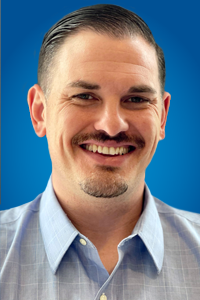
Ryan Chesterman, MPA, is the Service Experience & Wellness Coach for North American Partners in Anesthesia (NAPA). In this unique role, he is responsible for improving clinical interactions with patients and driving patient engagement at NAPA’s 500+ clinical sites, including hospitals, ambulatory surgery centers (ASCs), and office-based practices. Ryan is passionate about helping clinical teams and clinicians hone their communication skills. He frequently lectures and publishes about compassion and the patient experience.

Jonathan Markley, DO, serves as a Chief of Anesthesia for North American Partners in Anesthesia (NAPA). Dr. Markley is a Diplomate of the American Board of Anesthesiology. His professional affiliations include membership in the American Society of Anesthesiologists and American Society of Regional Anesthesia. Over the course of his career, Dr. Markley has received many accolades, including the 2017 St. Joseph’s Regional Medical Center Physician Innovation Award and the 2017-2020 New Jersey Monthly Top Doctor Award in Anesthesiology & Pain Management. Dr. Markley was also a recipient of NAPA’s Peter Walker, MD, Mission, Vision, Values Champion Award.

Rachel A. Wolfe, MSN, CRNA, is a Certified Registered Nurse Anesthetist (CRNA) providing care at the University of Pittsburgh Medical Center (UPMC) Hamot, University of Pittsburgh Physicians, and Children’s Hospital of Pittsburgh of UPMC. She is also Associate Director at the UPMC Hamot School of Anesthesia/Gannon University MSN Program. She divides her time between providing patient care for individuals of all ages and training future CRNAs.